15 Essential Games for Nintendo Entertainment System
Narration No AI was used in the creation of this file, just my own skills as an announcer and audio producer.
Intro song: "Retro Bright (NES version)" by T1na BadGraph1csGhost
All other songs originated in their respective games
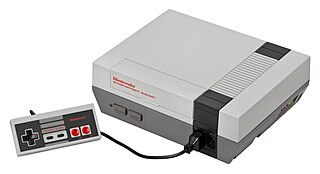
Photo: Evan-Amos, Wikimedia Foundation.
The Nintendo Entertainment System (more commonly, NES) is largely regarded as the first modern game console. Introduced two years after Atari Shock (what Wikipedia calls the Videogame crash of 1983), its capabilities allowed for smoother display with more animation steps, greater colour rendering, sound effects that didn't rely on a harsh noise generator, and musical underscores that you could actually hum along with. While the first half of the NES's lifecycle focussed mostly on arcade games, it didn't take long for developers to start experimenting with the limits of the system, bringing us multi-level platforming games, open-world exploration, role-playing games, and sports simulation.
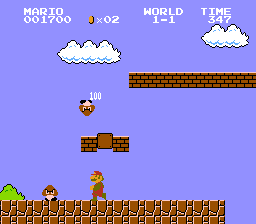
Super Mario Bros. October 1985, Nintendo R&D4 Availability: Wii Virtual Console, hShop, Nintendo Classics
No list of essential NES games is complete without this one. Taking principles introduced in Pitfall! and running with them, Nintendo polished the platforming genre into its modern form. Combining the treasure-hunting aspect of Pitfall! with the "damsel-in-distress" plot device of Donkey Kong, we arrive at Super Mario Bros. Gameplay is simple--go to the right, jump over things, collect coins, and hit enemies for a score bonus--but the simplistic difficulty of this game continues to vex completionists into the present day.
2
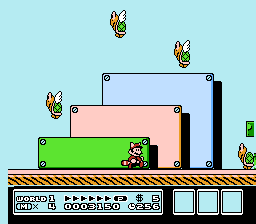
Super Mario Bros. 3 February 1990, Nintendo R&D4 Availability: Wii Virtual Console, hShop, Nintendo Classics
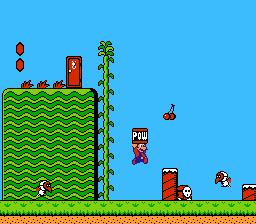
While Super Mario Bros. brought platforming games into the modern age, Super Mario Bros. 3 did the same for the Mario franchise. Establishing the idea that the world of the Mario Bros., Princess (Toadstool) Peach, and Bowser, was segmented into 8 different biospheres; introducing enduring characters, such as the Koopalings and Boom-Boom; and establishing that the Koopa clan get about on a fleet of Doomships; Super Mario Bros. 3 was the most technically-accomplished game developed in-house by Nintendo at the time. Apart from a cinematic storyline (that was highly adaptible for Saturday morning cartoons, I might add), it also contained several PCM samples of Ensoniq drum sounds that were used in the background score.
3
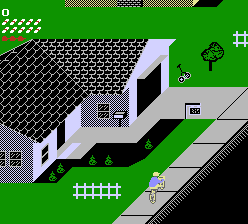
Paperboy December 1988, Eastridge Technology Availability: none (of this version)
With all these technological advances in the mid-1980s, let's not overlook the NES's humble beginnings as a vessel to play arcade games at home. Paperboy was an innovative arcade game that gave itself over well to console adaptation and, while numerous console ports of this game were made, the NES port was the most popular. Though lacking the grainy speech synthesis and bike handlebar controller of the arcade version, it made for an exceptional "arcade at home" experience on the NES.
4
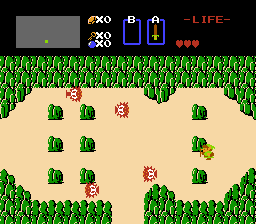
The Legend of Zelda July 1987, Nintendo R&D4 Availability: Wii Virtual Console, hShop, Nintendo Classics
The journey of a magical youth to save the princess from an evil overlord was certainly not a new idea, but Shigeru Miyamoto of Super Mario Bros. fame took the idea and ran with it to produce the world's most celebrated action-adventure series. While the Mushroom Kingdom was a linear place, where Mario and Luigi could only go left and right, Hyrule was famously non-linear. Go here, go there, it doesn't matter as long as you have your sword. Play long enough to beat the dungeon masters and reassemble the Triforce, then the game is complete. The Legend of Zelda's open-world playing field served as the archetype for the role-playing game, which we will see more of on the Super NES.
5
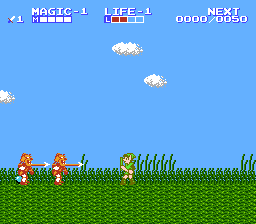
Zelda II: The Adventure of Link December 1988, Nintendo R&D4 Availability: Wii Virtual Console, hShop, Nintendo Classics
The Legend of Zelda's successor combined the open-world with the side-scrolling platform action of Super Mario Bros. While somewhat more linear than its predecessor, you could brave the dark dungeons with a full health bar and sharp eyes, or you could make it easy on yourself and find the lantern. Obviously, you'd stand more of a chance if you could actually see the Keese before they fly into you, but whatever.
6
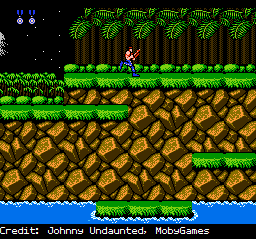
Contra / Probotector February 1988, Konami Availability: Wii Virtual Console, hShop, Nintendo Switch, PlayStation 4, Xbox One, Valve Steam
Before there was Doom, there was Contra. It started out as an arcade game, where every other stage required the player to set the base's autodestruct system by destroying the midlevel boss before hightailing it out of there. While the NES version is a pretty arcade-accurate port, the player needs only destroy the boss to move on to the next area. While it starts out fairly terrestrial—a Rambo-type gunman powering through enemies in a Vietnam-like jungle—it soon becomes evident that your adversaries are actually a hostile alien force in disguise. This wasn't good enough to assuage the consciences of Nintendo Europe, so the graphics were changed to make all the humanoid characters into robots, and the title was changed to Probotector.
7
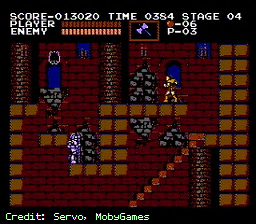
Castlevania May 1987, Konami Availability: Wii Virtual Console, hShop, Nintendo Switch, PlayStation 4, Xbox One, Valve Steam
One half of the "Metroidvania" genre of platforming games, so named because it and Metroid were so similar yet completely clean-roomed, and released at approximately the same time. Unlike its Nintendo counterpart, which takes place a long time from now in a galaxy far, far away; Konami's game takes place on Earth in the distant past, where the Belmont family are the custodians of Castle Dracula. Castlevania holds the distinction of being one of the only console platforming games to also see a release on home computers, inasmuch as it was released concurrently on MSX, MS-DOS, and Commodore 64. Did it run very well on those platforms? No, of course not. On NES, however, it served as the first installment in a generationally-popular series that saw games added to it all the way until 2014, including 2 sequels on the NES.
8
Castlevania III: Dracula's Curse September 1990, Konami Availability: Wii Virtual Console, hShop, Nintendo Switch, PlayStation 4, Xbox One, Valve Steam
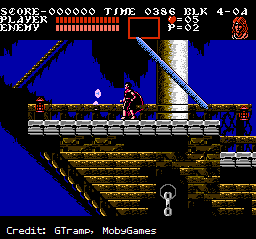
Case in point. While Castlevania II: Simon's Quest was more of a currency farming game that required you to grind for game days to get enough money to do anything with, Castlevania III returned to the formula of the original game. A straight platforming game with the added feature of midlevel bosses being bewitched people who will join Simon on his third quest to defeat Dracula. It also introduced a few items and enemies that made appearances in Super Castlevania IV.
9
Donkey Kong June 1986, Nintendo R&D2 Availability: Wii Virtual Console, hShop, Nintendo Classics
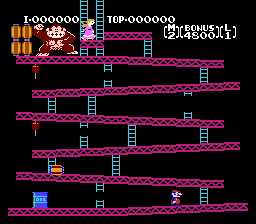
Before Nintendo was Nintendo, they cleaned up on the arcade market with this simple jumping game about a guy climbing a scaffold after a zoo's escaped gorilla and the girl it kidnapped. Well, as time wore on, the guy became the hero of the Mushroom Kingdom, the gorilla became the first member of the DK Crew, and the girl became mayor of New Donk City. But this... this is where it all started. The official reasoning for leaving the cement/pie factory at 50m out of the NES port was because of insufficient space on the cartridge, but looking at VRAM, this appears unlikely. More likely it was left out intentionally so people would continue playing the arcade version.
10
Mario Bros. June 1986, Nintendo R&D2 Availability: Wii Virtual Console, hShop, Nintendo Classics
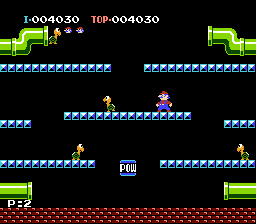
Before the Mario Brothers were Super, they were just plumbers from Brooklyn. One day, while fixing a leak in someone's kitchen sink, they found their way down into the sewer, where strange turtles, crabs, and flies were wreaking havoc with the pipes. The rest, as they say, is history. Out of the piles of home computer and console ports of this game from Atarisoft and Coleco, Nintendo's own port was far and away the most faithful to the arcade original. As it would be, considering the Famicom was nearly identical to Nintendo's arcade boards of the time. The only artefact is the shellcreepers' behaviour when hit; on the arcade, they would leave their shells and kick them around, while they simply turn upside down and sway for a few seconds on the NES.
11
Journey to Silius September 1990, Sunsoft Availability: Nintendo Classics
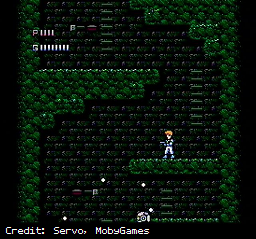
Going by "[rʌf] World" in Japan, Journey to Silius started out life as a Terminator license, but Orion Pictures reneged at the last minute, requiring Sunsoft to either retool the game into something not related to the film or eat the cost of the scrapped project. Instead, Silius got converted into the story of a boy who avenges the death of his father. The difficulty level is as high as you would expect any arcade shooter to be: you have an entire battalion of mechanised enemies gunning for you and only one single life to face them with. Powerups are sparse, health is sparser, and it's definitely going to test your reflexes. It's a side-scrolling platformer with shooting elements, somewhat like the next item...
12
Blaster Master November 1988, Sunsoft Availability: Wii Virtual Console, hShop, Nintendo Classics
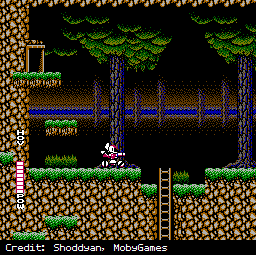
Called Chou Wakusei Senki Metafight in Japan, the Japanese version's storyline is quite different from the localised versions'. In Japan, Metafight had to do with a soldier taking his tank with him in a last ditch effort to save his planetary colony from being taken over by an evil empire. In all other regions, it's the story of a boy who jumps down a hole next to a radioactive waste drum in the backyard in search of his lost frog. I mean, we all had to do that, didn't we? Chase our pet down the hole in the back garden next to the family barrel of radioactive waste? While the name "Sophia the 3rd" referred to the planet in Metafight, it is the name of the tank in Blaster Master. The game is presented in 2 modes: sidescrolling shooter while driving the tank and top-down dungeon-crawler while searching down bosses. It was an ambitious project that paid off, and Sunsoft carried on using the game engine in their other NES games with slight modifications throughout the rest of the console's commercial lifespan.
13
Metroid August 1987, Nintendo R&D1 Availability: Wii Virtual Console, hShop, Nintendo Classics
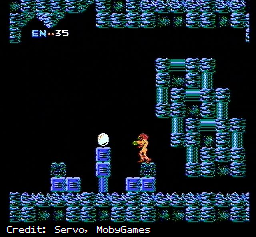
You didn't think we'd talk about Castlevania without talking about Metroid, right? Obviously, the game isn't identical to its Konami counterpart, with the first, most obvious difference being the sci-fi setting. Also, Metroid is the first action game where the player character is a woman. Yes, that's right, in case you hadn't been aware of Super Smash Bros., Samus Aran is very much not a man. There had been some talk around 2004 about Jennifer Garner playing Samus in a Metroid film adaptation, but Mr. Okada didn't think a film would be a good idea. Anyway, something Samus can get away with that Simon Belmont never could was using a freeze-ray to turn enemies into platforms.
14
Pinball October 1985, Nintendo R&D1 Availability: Wii Virtual Console, Nintendo Classics
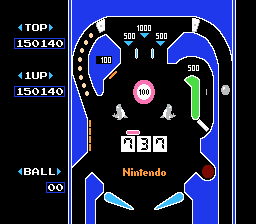
One of the Famicom launch titles in 1983, it was also released alongside Super Mario Bros. and Duck Hunt for the NES in North America. It's a simple pinball simulation that features Mario and Pauline from Donkey Kong in a bonus room where the physics make no sense. Sometimes, it seems like the ball goes immediately into the gutter without hitting anything, but that's the way it is with computerised pinball games. At 100,000 points, the flippers become invisible, though they're still there; it'll take another 50,000 points to restore them to visible, if you're good enough to get there. The only annoying bit is that, sometimes, the game decides that it's time to stop playing. In other words, the game's physics, themselves, will send the ball into a gutter without it hitting a single bumper or bringing it within range of any flippers; and it seems to happen more often when you're already having a bad day.
15
Tetris November 1989, Nintendo R&D1 Availability: Nintendo Classics
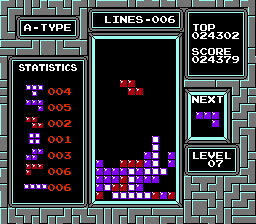
There were actually three discrete versions of this game. The first was by Bullet Proof Software and was released for the Famicom in 1988. The second was by Tengen and was released for the NES in 1988. The third was by Nintendo and was released for the Famicom and the NES in 1989. Nintendo's version was the only one that was approved for console release by the Soviet Electronics Export monopoly and Nintendo sued Tengen and BPS to stop selling their versions. Nintendo's version is the most ubiquitous, as it served as the basis for Dr. Mario and was remade and repackaged, Super Mario All-Stars style, for Super NES as Tetris & Dr. Mario.
Honourable Mentions
While these 15 games are definitely essential, there were a few more that are worth your attention, as well.
A
Super Mario Bros. 2 (NES version) September 1988, Nintendo R&D4 Availability: Wii Virtual Console, hShop, Nintendo Classics
Gameplay is a bit different from its predecessor, which is owing to its having been an adaptation of a completely different game. Originally released on Famicom Disk System under the title, Yume Koujou: Dokidoki Panikku, the game had nothing to do with Mario at all, instead being an interactive advertisment for a Fuji TV-sponsored festival. A game called Super Mario Bros. 2 had already been released on FDS and news of its existence had filtered across the ocean to Mario freaks in North America; however, this game was simply a re-map mod of the original Super Mario Bros., which took elements of the original game and added maps that were so difficult as to make Nintendo of America quality-assurance manager, Howard Phillips, question his career choices. When Minoru Arakawa told the Japanese office "absolutely not" in no uncertain terms, he also requested that Yume Koujou: Dokidoki Panikku be retooled into the "Super Mario Bros. 2" that was taking the American rumour mill by storm, saying that it would perform much better than the arcade dreck Miyamoto had provided. And it did. And here we are.
B
NES Open Tournament Golf September 1991, HAL Laboratory Availability: Wii Virtual Console, hShop, Nintendo Classics
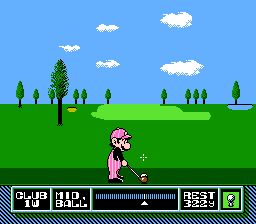
The immediate predecessor to the Nintendo 64 game, Mario Golf, this game combines Satoru Iwata's first NES game, Golf, with the Mario characters. While the player character in Golf may have resembled Mario, it was Nintendo's position that he was not. This time, however, it definitely is. Plainly a stopgap measure between Super Mario Bros. 3 and Super Mario World for kids who just couldn't get enough of Mario, it's amazing how accurate the game's ball physics are, considering it's the NES. While the 2-step backswing controls made their way into Mario Golf, club selection, angle, shot power, and placement are all carried out on a separate screen.
C
Kirby's Adventure May 1993, HAL Laboratory Availability: Wii Virtual Console, Nintendo Classics
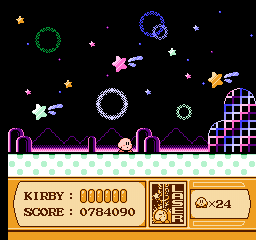
We've talked a good deal about Mario at this stage, but hardly at all about Kirby. Adventure was actually Kirby's second game, after Dream Land on the Game Boy. While gameplay is similar, Kirby gains his "Copy" ability in this game, allowing players to suck stuff up and see what happens. After Dream Land, Kirby tended to appear on systems only at the end of their lives; the NES only had about a year of support left as the Super NES had been out for 2 years by the time Kirby's Adventure was released. That happened again on the Super NES; Super Star was released on the same day as the Nintendo 64 and Dream Land 3 was amongst the final 20 games released for the platform. While The Crystal Shards happened in timely fashion on the N64, The Amazing Mirror on GBA was overshadowed by the imminent release of the Nintendo DS. Although... you know, we have to remember that the DS was sort of a continuation of the Game Boy Advance, since Nintendo really wanted to show off the fact that the DS had a GBA port in it. Anyway, this is all stuff you can read on Wikipedia. Moving on.
D
R.C. Pro-Am February 1988, Rare Availability: Nintendo Classics, Xbox One (as Rare Replay)
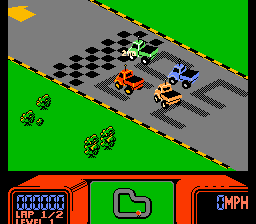
Rareware's first successful NES title, players race virtual radio-controlled cars around a track. As far as anyone can tell, RC Pro-Am was the first racing game to feature beneficial pickups on the track, which Super Mario Kart would run away with in 1993. Unlike other racing games, which tended to keep the camera fixed behind the car, RC Pro-Am fixes the camera in an isometric perspective, like SimCity 2000. While this cut down on computation, it increases the difficulty somewhat, relative to games like Rad Racer and F-1 Race, in that the player needs to consult the minimap every so often to see what's going on and where the next turn is.
E
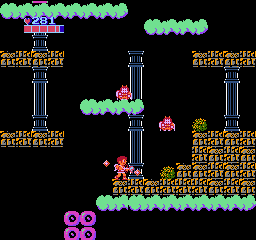
Kid Icarus July 1987, Nintendo R&D1 Availability: Wii Virtual Console, Nintendo Classics
Providing the model for our modern concept of "crunch", members of R&D1 slept on cardboard under their desks to complete the game on schedule. I think the very least we can do to recognise their ridiculous sacrifice is play this game. Using the same game engine as Metroid (itself based somewhat on Super Mario Bros.), the game is vertical, with occasional detours into rooms. The game itself uses some elements of ancient Greek mythology, though Pit and Palutena are not based on any particular mythical figures. In fact, the game gets rather silly at times, with enemies designed to resemble Hirokazu Tanaka's nose and wizards that turn Pit into an eggplant.