15 16 Essential Games for Super Nintendo Entertainment System


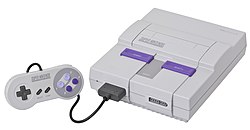
Image. Super NES, North American variant.

Photo: Evan-Amos, Wikimedia Commons.

The "arcade at home" concept of the mid-1980s now a distant memory, the 16-bit consoles made the distinction between videogames and arcade games. While the first few games for the Fourth Generation were still grounded in their arcade archetypes, it didn't take long for the Super NES to diversify away from life-based platformers with time counters.

Availability: Per game (see below)

Games
1. Super Mario All-Stars + Super Mario World
2. F-Zero
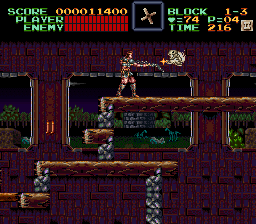
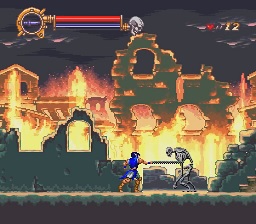
3. Super Castlevania IV
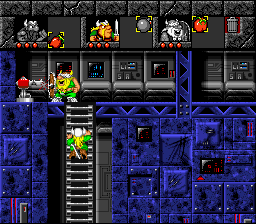
4. The Lost Vikings
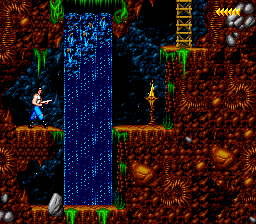
5. Blackthorne
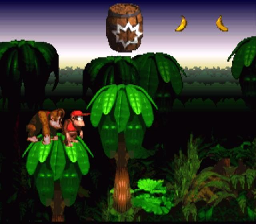
6. Donkey Kong Country
7. Donkey Kong Country 2: Diddy's Kong Quest
8. EarthBound
9. Earthworm Jim
10. The Legend of Zelda: A Link to the Past
11. Harvest Moon
12. Super Mario RPG: Legend of the Seven Stars
13. Super Metroid
14. Soul Blazer
15. Chrono Trigger
16. Super Mario World 2: Yoshi's Island

Honourable Mentions.
A. Super Mario Kart
B. Street Fighter II Turbo
C. Aero the AcroBat 2
D. Castlevania: Dracula X
E. Donkey Kong Country 3: Dixie Kong's Double Trouble!

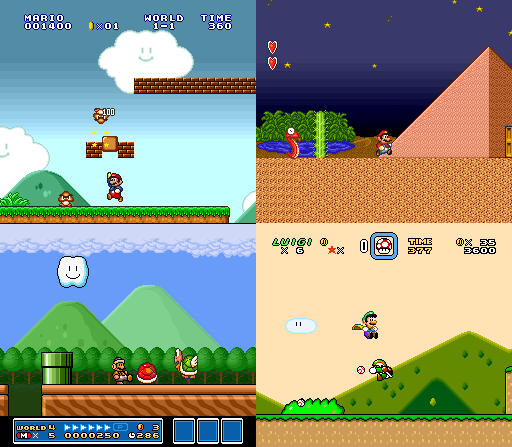
1 Screenshots from all 4 unique tilesets in Super Mario All-Stars + World.
Click to expand.
Super Mario All-Stars + Super Mario World
December 1994, Nintendo of America
Availability: none (of this version)
Aren't I cheating a little, recommending a multicart? Well, yes. Super Mario All-Stars was the "HD remaster" of all three NES Super Mario Bros. games, released in 1993. It upscaled the graphics and sounds to the level of Super Mario World. All-Stars was a standalone release that you would have to point at in the game cabinet at Wal-Mart, while World was packed in with the Super NES console from launch until about 1994. Eventually, the two games were combined into a single cartridge that took the place of Super Mario World and Super Mario Kart as a console pack-in. The only way you could have Super Mario All-Stars + Super Mario World was to have purchased a Super NES from December 1994 until about 1997 when the SNS-101 was released. After this time, Nintendo discontinued the game, making cartridge copies of this game somewhat rare. Indeed, most Super NES ROM collections tend to keep All-Stars and World separate. But, emulation is pretty much the only way you'll ever see this Luigi ever again.
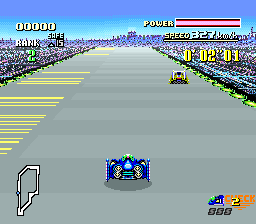
2 Big Blue grand prix in F-Zero. F-Zero
August 1991, Nintendo EAD
Availability: Nintendo Classics
The Super NES's famed Graphics Mode 7 revolutionised the way gamers thought about arcade racing games. Gone were the days of having to update track position frame by frame in assembly language; now, the Super NES allowed developers to pre-define an entire track as a background texture, then stretch it and scale it and twist it all around. F-Zero, being a launch title, is somewhat primitive in this genre, as it doesn't really have any obstacles to speak of, just hazardous areas on the track.
3 When a problem comes along in Super Castlevania IV. Super Castlevania IV
December 1991, Konami
Availability: Nintendo Switch, PlayStation 4, Xbox One, Valve Steam
Konami really wanted to showcase the Super NES's graphical capabilities with this game. Unlike all previous (and future) games in the franchise, Simon's chainwhip is affected by gravity and its heading can be changed based upon the direction being pressed on the D-Pad. Since Up+B now makes Simon whip upwards, the shoulder buttons are used to launch items. You can even stand still and flick the whip around; it does less damage per strike, but it looks cool and really shows its usefulness if you miss your target with the first whip.
4 Baleog climbs a ladder in The Lost Vikings. The Lost Vikings
April 1993, Silicon & Synapse
Availability: Nintendo Switch, PlayStation 4, Xbox One, Valve Steam
As much a strategy game as a platformer, you control three vikings (one at a time, that is) in order to find the key, open doors, and make it to the exit. Each viking has a different ability; Erik can jump, Olaf has a shield, and Baleog has weapons. It's an uncommon riff on the standard platformer that never got used much later.
5 The mines of Androth in Blackhawk. Blackthorne Personal favourite.
September 1994, Blizzard
Availability: Nintendo Switch, PlayStation 4, Xbox One, Valve Steam
A descendant of Prince of Persia, this platformer has about as much in common with Castlevania or Metroid as the Super NES has with the Atari 2600. It's a little easier to control the player character here than Prince of Persia, as you can't take half-steps and the only movement you can make while crouched is a tactical somersault roll.
6 Climbing trees in Donkey Kong Country. Donkey Kong Country
November 1994, Rareware
Availability: Nintendo Classics
While all the other guys were busting their humps trying to make 32-bit consoles work, Nintendo sat back, laughed, and published Rareware's most celebrated title on the 16-bit Super NES. Nintendo liked Rare's redesign of Shigeru Miyamoto's gorilla so much, they licensed his likeness to put into all their future games from 1996 up to 2024; that's why you used to see "Rare, Ltd." under the acknowledgements or special thanks to's in first-party credit screens for games involving DK. It's everything a Super NES game should be, from SGI computer sprite work to a rockin' soundtrack, if you had no other games for Super NES, Donkey Kong Country could do you for years. Well, maybe this and the next item...
7 Dixie jumps for a DK barrel in DKC2. Donkey Kong Country 2: Diddy's Kong Quest
November 1995, Rareware
Availability: Nintendo Classics
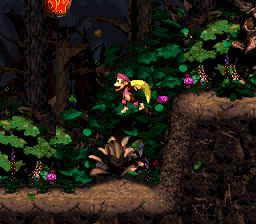
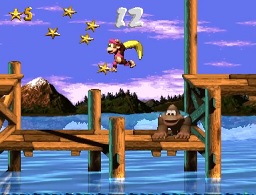
The direct sequel to the previous item, DKC2 stars Diddy Kong and his girlfriend, Dixie. Even though I say I don't want to just fill the page up with sequels and series, there's page filler and then there's quality, which DKC2 is. It's everything you would want in a Donkey Kong Country sequel; longer maps, enemies with a wider array of skills, more treasure, a pirate ship, and a rocker girl with a ponytail. Plus, Donkey's brute strength is not going to help you this time, so you need to strategise in order to get both Diddy and Dixie through to the exit. If you've been saying this game's title wrong since 1995, don't worry about it—that's what its working title was.
8 A modern adventure in Earthbound. EarthBound
June 1995, Ape / HAL Laboratory
Availability: Nintendo Classics
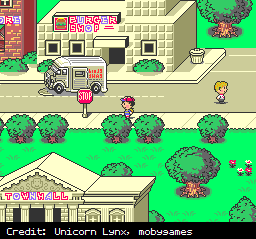
Mr. Itoi's celebrated roleplaying game finally got released outside Japan on the Super NES. For whatever reason, this game's NES predecessor; the Famicom game, Mother; never left Japan... well, not until 2018, anyway, when an officially localised version was released on NSO. Earthbound takes the genre of Japanese roleplaying game and sets it in the modern day, where instead of using magical power to fight enemies in Tolkienian forests and castles, a '90s kid takes his baseball bat and school backpack with him and goes on an adventure to save the world from time-travelling aliens. Magic power does show up, of course, in the form of PSI abilities.
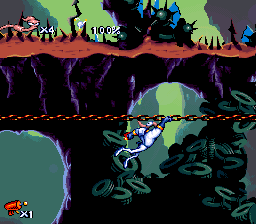
9 Grappling on a chain in Earthworm Jim. Earthworm Jim
October 1994, Shiny Entertainment
Availability: none
It's like a cartoon that you play as a game. As sort of the Seinfeld of the action platforming genre, Jim's entire adventure is based on absolutely nothing, apart from keeping a mech-suit away from some kind of space chicken for reasons that are never made clear. There was a sequel—Earthworm Jim 2—that was released to more consoles than Doom, but the first game is a traditional platforming game, while its successor is an "LMAO random rawr"-type endurance test. Mere page-filler, which I shall not be recommending here.
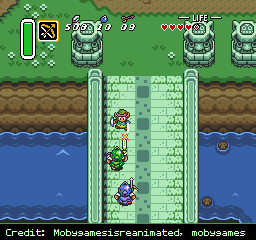
10 Fighting some enemies in A Link to the Past. The Legend of Zelda: A Link to the Past
April 1992, Nintendo EAD
Availability: Nintendo Classics
Hyrule gets a significant glow-up in Link to the Past. Something of a prequel to the NES Zelda games, Link has to travel between the Light and Dark worlds in order to rescue the descendants of the Seven Sages and challenge Ganon and his puppet, Agahnim. The 7th-highest selling Super NES game, Link to the Past has been re-released almost as many times as Super Mario Bros. and is a mainstay of fanfiction and internet memes.
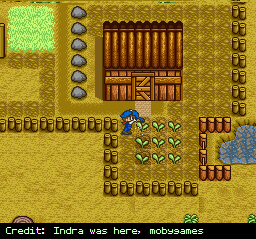
11 Watering your crops in Harvest Moon. Harvest Moon
June 1997, Amccus
Availability: Nintendo Classics
Before The Sims, there was Harvest Moon. You take over your grandparents' farm, clear away the weeds and rocks and things, and go into town. It can be treated like a farming simulator only, or in true Sims fashion, you can marry one of the girls you meet and have children. Rumours that the game's English title was inspired by the Neil Young album of the same name are likely just fairy stories.
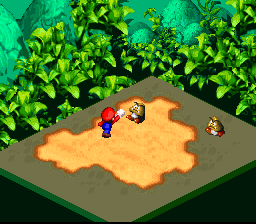
12 Mario doing what he does best in Super Mario RPG. Super Mario RPG: Legend of the Seven Stars
May 1996, Square
Availability: none (remake supplanted original)
The final Super Mario title for the platform, this is sort of the Mario equivalent of Sonic 3D Blast. Like any other role-playing game, it has a turn-based battle system, for which you gain EXP when you win and it's game-over if you lose. Mario doesn't travel alone; he'll meet other characters who want to join his adventure. It's a great game, but it never saw much media coverage in its day, since it was released only 3 months before the Nintendo 64 came out and deprived it of its momentum.
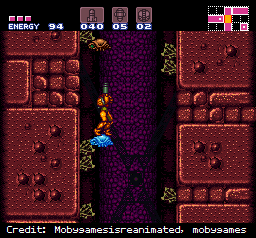
13 Samus stands on a frozen enemy in Super Metroid. Super Metroid
April 1994, Nintendo R&D1
Availability: Nintendo Classics
The Space Pirates are at it again, trying to make biological weapons from the life-sucking Metroids; except this time, they actually have a Metroid to experiment on, and the Federation sends Samus in to get it. Like The Legend of Zelda, Metroid gets a major glow-up on the Super NES. Gameplay has not changed substantially from its NES predecessor, so people familiar with the game are able to transition easily into Super Metroid.
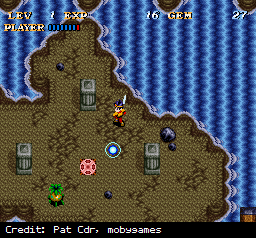
14 The first dungeon in Soul Blader. Soul Blazer
August 1992, Quintet
Availability: none
The Super NES was known for its wide array of role-playing games. While most never saw a release outside Japan, Soul Blazer was one of a handful that did. It's a bridge of sorts between Enix's earlier game, ActRaiser, and their later one, Illusion of Gaia. It is like ActRaiser in that it's more Zelda like in its gameplay than your average RPG. It has ActRaiser's platformer action mechanics as opposed to your traditional turn-based combat of the roleplaying genre. It's like Illusion of Gaia in that it's a top-down aspect game. The only problem, if you can call it that, is that the player character is incapable of diagonal motion; you must move along the 2 cardinal axes in order to get anywhere. This was probably done out of misguided apprehensions regarding Gunpei Yokoi's patented directional pad and people not being able to easily press two proximate directions. Completely false, (viz. A Link to the Past) but that's the way it is.
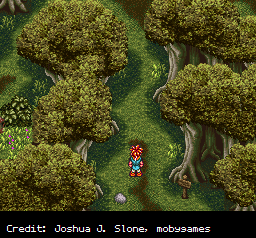
15 Walking through a forest in Chrono Trigger. Chrono Trigger
August 1995, Square
Availability: Android, Valve Steam
Chrono Trigger, on the other hand, is like Super Mario RPG; a turn-based roleplaying game. Well... actually, one should say that Super Mario RPG is more like Chrono Trigger. Interestingly, both games were developed by the same company and used largely the same game engine. It's often listed high up in retrospective writers' lists of great Super NES games, mostly due to its cinematic storyline and deceptively simple beginning.
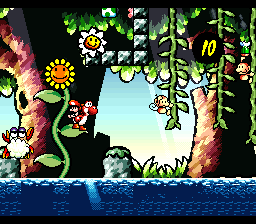
16 Using a sunflower as a platform in Yoshi's Island. Super Mario World 2: Yoshi's Island
October 1995, Nintendo EAD
Availability: Nintendo Classics
Despite the "Super Mario World 2" label, this game serves as more of a prequel to that game. Though the canonicity of the Mario Bros.' origin story as displayed here is somewhat disputed (with the initial dispute being from Miyamoto himself), the game pushes the Super NES's abilities to just shy of their absolute limit, using standard 2D projection, Mode 7 effects, and the Super FX Chip. Probably the only game that required more from the Super NES was Randy Linden's port of Doom. As other commentators on Neocities have pointed out, this game's juvenile art-style imparts a much-needed sense of childlike wonder amidst the games being made for Windows and Sony PlayStation that were all about death, destruction, Hell, personal peril, and such. It, along with Donkey Kong Country, also proved that 32-bit consoles were not necessary and that Nintendo was going to continue supporting the 16-bit Super NES for as long as it could. Or, at least until September of 1996, anyway. "Wait, why is this at the bottom of the list, occupying the 16th slot in a list of 15 games?" Because I forgot about it. Okay? I was in a hurry or something.

Honourable Mentions.

There were way too many great Super NES games to fit into a measly 15— er, 16-entry list, and certainly more than just these 5 honourable mentions! But, we've got to draw the line someplace, so here are 5 more games for your consideration.

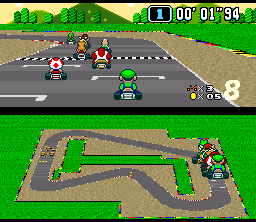
A Starting a GP Race in Super Mario Kart. Super Mario Kart
September 1992, Nintendo EAD
Availability: Nintendo Classics
Provisional; recommendation pending review
Taking the racing gameplay of F-Zero and applying Mario characters to it was quite possibly the most inspired idea in gaming history. Having set the example, Super Mario Kart served as the inspiration behind generations of go-kart games. Taking control of Mario, Luigi, or 6 others, players can race for the best time in Time Trial mode, or get right into the competition in a GP race. Like its next-gen successor, 2 players may challenge each other or the computer in a GP race.
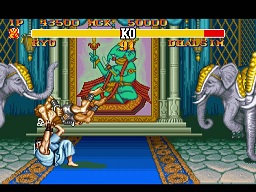
B Ryu throwing Dhalsim in Street Fighter II Turbo. Street Fighter II Turbo
August 1993, Capcom
Availability: none
The best-selling game for the platform that wasn't a pack-in, Street Fighter II Turbo adapts the popular arcade fighting game, Street Fighter II: Hyper Fighting, for the Super NES. It's the genre's classic formula: 2 fighters with decrementing health metres, beating each other up until one of their health metres decrements to 0. While I personally am not greatly fond of arcade fighting games (being the photorealistic military FPS games of their day), we have to observe the culture of the time; and the '90s was all about fighting games. You were a Street Fighter kid, a Final Fight kid, a Killer Instinct kid, or one of those edgy Mortal Kombat kids; and which game you played dictated whose table you sat at in the school cafeteria. Me? I was a Super Mario kid; f*#k the arcade, they're noisy and full of toxic juvenile masculinity. Okay, well, this struck a bit of a nerve there, didn't it? Moving on!
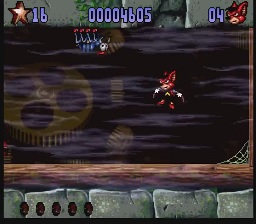
C Bell Castle in Aero the Acro-Bat 2. Aero the Acro-Bat 2
November 1994, Iguana
Availability: none
Despite being a direct sequel to Aero the Acro-Bat, it really doesn't make a difference whether you play the first game or not. This game has better music and sounds, more interesting levels, and a cinematic storyline (with, at times, questionable art) in comparison to its predecessor. The controls are all otherwise the same, and the opening cutscene establishes enough of the story from the previous game for people who missed it (intentionally or otherwise).
D Richter whips a skeleton in Dracula X. Castlevania: Dracula X
September 1995, Konami
Availability: Nintendo Switch, PlayStation 4, Xbox One, Valve Steam
A somewhat more traditional Castlevania game in comparison to Super Castlevania IV, this game is a port of the NEC Turbo-CD game, Rondo of Blood. Richter Belmont, descendant of Simon Belmont, has his girlfriend and her sister kidnapped by a recently-resurrected Count Dracula and enters the Castle to find them. While lacking in any whizz-bang Mode 7 effects like its predecessor had, it has three possible endings; A, you kill Dracula but fail to rescue your homegirls; B, you rescue little sis, but are forced to kill your possessed girlfriend; C, you rescue everyone and kill the Count. Unfortunately, due to technical limitations, you can't unlock Marie as a player character by rescuing her like you could on the Turbo-CD; it's just Richter.
E Reaching for the stars in Dixie Kong's Double Trouble. Donkey Kong Country 3: Dixie Kong's Double Trouble
November 1996, Rare
Availability: Nintendo Classics
Released a month after the Nintendo 64 and amongst the final 20 officially-licensed games for the Super NES, DKC 3 stars Dixie Kong and her cousin, Kiddie Kong, travelling throughout the Northern Kremisphere to rescue Donkey and Diddy from the Kremlings again. It's something of a tired formula, but the quality of the soundtrack, graphics, and gameplay continues to measure up to its predecessors. It's a bittersweet moment for DKC fans, as it was the last game in the series until Donkey Kong Country Returns in 2010, nearly 15 years later! And, the last appearance of Dixie Kong until Tropical Freeze in 2014, 18 years later! And the only appearance of Kiddie Kong, but no one cares much about that. Presumably, he grew up and went into software development.

MAIN MENU | HOMEPAGE