There's been a real tangible push-back against social media sites lately, which is good. I'm all for that. I've heard tales of Facebook helping abusers, Twitter being used to harrass people, and certainly TikTok and Vine before it being used by advertisers to convince children to get cosmetic surgery. Then, of course, there's the AI systems training and soulless procedurally-generated content that comes part-and-parcel with any given social media experience. Even with activism, like Arab Spring and the Black Lives Matter movement, big stories of social media helping play a part in wide-reaching social change overshadow the smaller stories. A friend of mine was stalked by her boyfriend's brother, who was using Facebook to cull information and keep in contact with her oblivious family. She's not the only one. I can't cite any sources at the moment, because that's a bit of research that, for mental health reasons, I would rather not do just now. Suffice to say, social media has done a lot more harm than good.
However, the way gen-alpha, gen-z, and younger millennials have decided to push back against social media has left them wide open for a fall into the Nostalgia hole. We're already seeing this a lot in regards to Frutiger Aero. Like I wrote once, Frutiger Aero is the elevation of a very insignificant bit of culture at the expense of the actual jingoist culture of post-9/11 America. Obviously, you don't want to spend your whole life marinating in politics and war stories, but it opens you up to nostalgia as escape from the horrors of the modern age.
More to the point, there is a conceit amongst more people on Neocities than I'd like to see, wherein the "Old Web" was somehow "better" and "more wholesome". What? What the actual hell? Before I get too far into it, let me just reassure everyone that we had to put up with exactly the same kind of shit on the "Old Web" as we have to put up with in the Social Networking Age, only with less tracking and slightly more personal privacy.
I think the end for this trend is within sight, and I'm even posting from an example of it. Neocities and Nekoweb are currently the 2 most favoured free web hosts for people looking to jettison social media; Neocities even has a Twitter-like social network for registered users. Neither of these hosts have corporate sponsorship (at the time of writing anyway), so their very existence reminds me more of sublet registered domains back in the "Old Web" days. Clarity Anne @ Fabled.day put it much more concisely; but, essentially, you would request a spot on someone's domain so you could have a free web host without a fullpage advert building itself into your code and 20 pop-under advert windows opening everytime you moved the cursor over a link. People who had such an arrangement were called "hostees". Same naming convention as "employee": rather than hosting your own domain, you would be hosted by someone who already had one, hence "hostee". Sublet domain hosts could impose arbitrary conditions for their hostees; such as "no talking about xyz subject" or "every new paragraph must begin with the phrase 'I reckon'", something like that. Neocities and Nekoweb have conditions for their hostees as well.
Let's look at the name, "Neocities". This is a play on the Latin word for "new" and the defunct "Old Web" hosting service, GeoCities. The impression one is meant to get from this is that it's a "New Geocities", a new webhost for old-style personal websites. I don't like that, honestly. Not that I have anything against GeoCities or free webhosts as a concept— the problem is that it plays on our nostalgia. "Remember GeoCities? Well, it's back under new management," something like that.
The idea that the "Old Web" was full of innocent fun, quirky little Java games, and honest people doing honest work is a complete fallacy. For a start— and, hang onto your pearls, Ms. Censordoll— the "Old Web" was driven by porn sites. You think I'm joking about this? E-commerce as we know it today would not exist had it not been for porn sites needing ways to get paid. There was a joke back in the late '90s: "The only reason the internet exists is porn and Star Trek." While I question the adult entertainment industry's treatment of its workers, I don't have any problem with consenting adults being photographed having sex, nor do I have a problem with anyone using the internet to seek that out. The problem here is that the "Old Web" was fraught with dangers of other kinds, which no one seems to acknowledge or even discuss. After 5 hours downloading a file from LimeWire, were you going to actually end up with an episode of Courage the Cowardly Dog, or was it going to be cartel beheading video? When you checked your email, were you going to find a love note from your girlfriend or a virus that would make your hard drive explode? Were those MP3s you downloaded actually from Oh, No! It's Devo, or were they containers for malware that would hijack your webcam and audio driver? Also, don't let's forget about goatse.cx and its imitators. Was this a real Sims fansite, or a single page with a picture of something you need to rip your own head off to unsee? The highly-venerated, much-adored "Old Web" was truly the wild wild west of the computer literacy set. Even people with relatively high computer literacy, such as office workers and high school computer applications teachers, would get snowed by some edgelord or another.
The thing that finally sent me to my code editor to write this, however, was Spacehey. C was talking to me the other night about a new site that R had set up an account on, which turned out to be Spacehey. For those who don't know, Spacehey is supposed to resemble MySpace from the 2005-2007 period of time... which it does. A lot. So much in fact that it brought back really bad memories. R and C are too young to remember name-brand MySpace, but I was 15 when MySpace rose to prominence, and all it did was create another layer of separation between friend groups and everyone else. More than that, even my own friends would talk and laugh about something they had talked about on MySpace, refusing to explain it to me when I asked for clarification. I was never on that site for personal reasons: it seemed too trendy, and I refused to engage with anything trendy, to the point I never even touched YouTube until 2010. So, either intentionally or not, my friends drove a sizeable wedge between them and me by making single-word references to things they'd read on the site while all I could do was stand there and feel like a fifth wheel.
Perhaps more important than my feeling left out, however, was MySpace's role in the breakdown of personal privacy. You were encouraged to share personal, heretofore privileged information on that platform, but only with people you trusted. Nevertheless, that allowed Facebook to swoop in from the wings and encourage you to "help" them connect you with others by supplying publicly-visible privileged information, up to and including your home address and phone number, to say nothing of pictures of your face and a complete interest inventory. Talking of the new-millennium jingoism, the USA PATRIOT Act was in full force by the time MySpace came around, leading to the first generation of investigations and arrests based upon information culled from an online database. On a number of levels, MySpace was the vanguard of the surveillance state, and Spacehey is an entirely unnecessary return to an internet that never existed anywhere except the minds of a few nostalgic teenagers, wishing they had been born in a different generation.
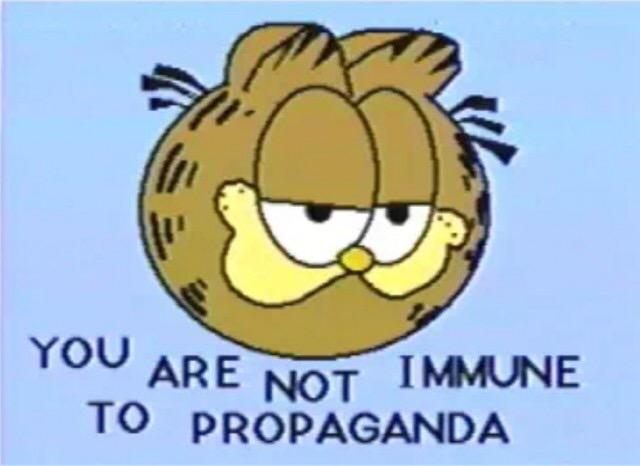
The main issue I have with this whole "Make Online Great Again" thing is mainly that it's a reformulation of the "good ol' days" fallacy; the conceit that the past was always better, therefore strides backward should be made to return to it. However, the "good ol' days" never existed. They are simply a tool used by corporate feudal oppressors to lull people into a false sense of security. Take the Nintendo Switch 2 as the most recent example of this. After making no effort to restore GameCube compatibility across 2 entire generations of game consoles, Nintendo suddenly comes in with the appeal to millennials' sense of nostalgia: "We're bringing back GameCube games on our expensive double-subscription service for our $500 console." Suddenly, people who were perfectly content playing Super Mario Sunshine on Dolphin are now scampering off to the internet to pre-order their Switch 2 console. Nintendo hit the Nostalgia button and will now make hundreds of thousands more off people who, up until now, were emulation enthusiasts.
More insidiously, fascists also appeal to a sense of manufactured nostalgia. Midcentury-modern and cottagecore, for instance. In the midcentury-modern aesthetic, we saw a glorification of an imagined 1950s, full of IKEA furniture and hardworking men coming home every night to a fawning, servile wife. In cottagecore, we go even further back to a contrivance resembling 1900s rural England and 1940s pre-war America, mixed with bits of Mormonism and 1950s white supremacy. Donald Trump and others have campaigned for public office on platforms of a return to "traditional values". I've already talked about this.
There's nothing inherently "wrong" or "immoral" about nostalgia, just be careful if you find yourself re-shaping your belief system around it, and remember the old axiom: