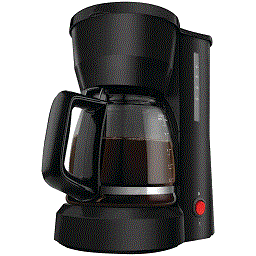
Bog-standard drip coffee maker with a single button: a power switch along the side.
Bog-standard drip coffee maker with a single button: a power switch along the side.
Supplies
Drip coffee maker
Paper coffee filters
Ground coffee
Water
Measuring cup
Coffee cup
Setting up your coffeemaker
A. Unbox your coffee maker and plug it into a power outlet. Before making any coffee, clean the carafe (the actual pot into which coffee drips) with warm water and dish soap. If you prefer, you may also use the top rack of the dishwasher. In the case of a metal carafe, do not wash in dishwasher.
B. When carafe is clean, fill carafe to 3/4 with water and fill the coffee maker's reservoir. Place carafe back onto the hotplate and switch the coffee maker on. Brewing a pot of plain water will clean the coffee maker's piping system. Turn off the coffee maker and discard the water once it is done. Place the empty carafe back onto the hotplate.
Important! Allow the carafe to cool before proceeding with step 1!
Making a pot of coffee
1. Open the coffee maker's basket and place a coffee filter into it. The basket will be circular or oval in shape, with ridges down the sides to keep the coffee filter in place. Fill the coffee filter with 1/4 cup of ground coffee. Close the basket.
2. Using a 1-cup measuring ladle, fill the coffee maker carafe with 4 cups of plain water. When done, pour the carafe into the coffee maker reservoir, then place the carafe back on the hotplate. Close the reservoir.
3. Switch on the coffee maker. Allow all water to vacate the reservoir before pouring coffee.
4. Pour the brewed coffee into your cup and enjoy!
Care and maintenance of your coffeemaker
Cleaning the tubing system. Every month or so, fill the reservoir with a 3:1 solution of water and vinegar (2 cups of water, 1/2 cup of vinegar) and brew it. This will aid in cleaning hard water scale out of the tubing. After brewing the solution, discard it, then brew 3 cups of plain water. Do this as many times as is necessary to make the coffee maker not smell like vinegar anymore.
Cleaning the carafe. On the same day you clean the coffee maker's tubing system, wash the carafe by hand in warm water with dish soap. This is preferable to washing it in the dishwasher because the dishwasher won't be able to clean off the coffee stains.
Ew! Mouldy! Be sure you take the spent coffee filter out of the basket as soon as possible after brewing a pot of coffee. Coffee grounds promote the formation of mould and, if the filter should mould whilst in the basket, you will need to replace the basket and, quite possibly also, the carafe. Why? Mould will penetrate the plastic, tainting any coffee or water that passes over it, whilst continuing to metabolise the plastic housing of the coffee maker. If mould is allowed to form inside the permanent filter, you will need to throw it away.
Frequently-asked Questions
Q. Can I use the permanent filter that came with my coffee maker instead of a paper filter?
A. Yes. Please note, commercial ground coffee is usually ground finely enough for "coffee dust" to flow through the mesh and accumulate in the bottom of the carafe. This is normal. To clean the permanent filter, use warm water and dish soap.
Q. What happens if I leave my coffee maker switched on?
A. Most coffee makers have a power-cycling function, which is designed to keep brewed coffee warm for extended periods of time. While individual tastes vary, most people find the coffee will become bitter after 90-120 minutes on the hotplate. Otherwise, nothing will happen at all.
Q. What happens if I leave my coffee maker switched on with nothing in the carafe?
A. I don't actually know. In any case, I don't recommend it. If there was coffee in the carafe, and you left it on for so long that the coffee evapourated, the coffee concentrate will probably ruin the carafe.
Q. How do I reheat coffee after it goes cold?
A. Reheating is not generally recommended, as it tends to make the coffee bitter. However, if you must reheat it, pour the coffee into a microwave-safe cup and give it 45 seconds on 70% power.
Q. Can I use my coffee maker for anything else?
A. By brewing plain water without any coffee, you can use the coffee maker to heat water. This can be used to make tea, instant soup, instant oatmeal, and many other things.
Q. My coffee filter folded itself somehow! Grounds are all over the damn place! How do I clean the basket out and get on with my life?
A. Coffee maker baskets can be removed from the casing, usually without tools. Remove the basket from the coffee maker and dispose of loose grounds in the rubbish. Then, rinse the basket out with plain water.
Q. Can I salvage the coffee I made from a folded filter?
A. Yes. Place a fresh filter into a sieve or pasta strainer. Holding the strainer over a saucepan or other heatproof container large enough, pour all the coffee from the carafe through the filter, then rinse the grounds out of the carafe with the hottest water your faucet can muster (the carafe is hot; water colder than itself will crack it).
Q. Can I make just one cup of coffee in my coffee maker?
A. Yes. For 12 oz. of water, use 1 Tbsp of ground coffee.
Q. How much is this going to save me on twice-daily trips to Starbucks?
A. Assuming you buy all the supplies for home coffee-making at the same time, you'll spend approximately $40 US. A single 12 oz. packet of ground coffee will yield 12-16 cups of coffee (depending on the size of your coffee cups). This same amount of coffee at Starbucks, assuming black coffee with no additions, would cost $72 US. Making your own coffee at home pays for itself twice before the first packet is empty.
Q. Can you recommend any good brands of ground coffee?
A. Unfortunately, the brands sold in my hometown grocery stores are most likely not the same brands sold in yours. In general though, it's important to make sure that the coffee is fair-trade, to ensure it didn't come from a slave plantation. A simple internet search of "[coffee brand] slavery" will usually turn up a whistleblower if there's been one.
--5 November 2023--