15 Essential Games for Nintendo DS
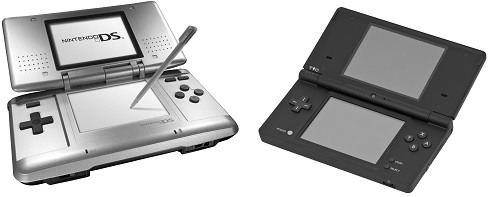
Photo: DS (left): Nintendo of America | DSi (right): Evan-Amos, Wikimedia Foundation.
The successor to the Game Boy Advance introduced a touch-sensitive second screen, and a hard plastic stylus with which to hopelessly scratch it after years of continuous use. Predictably derided by adult male game journalists as providing redundant and confusing information upon announcement, the DS turned out to be Nintendo's best-selling console and the 2nd-best selling console of all time, behind the PlayStation 2. The DS was followed up by the DSi in 2008, which added front- and back-facing cameras, internet connectivity by default, a DLC shop, and a solid wall of polymer composite where once there was a GBA cartridge slot.
Availability: emulation or jailbreaking only.
Nintendo have discontinued every DLC service and halted every product line having to do with the DS family of systems. Moreover, they do not currently produce a game system that is capable of running DS games, either in physical or ephemeral form. Thus, the entire library of Nintendo DS games falls squarely under abandonware. That means, of course, that any DS ROMs you find on No-Intro can be downloaded and played in broad daylight. Of course, to actually use those ROMs on a physical DS, you'll need to jailbreak your system first. This is easier on a DSi, since it has an SD card slot built-in and requires no special hardware. It's a simple process that doesn't take too much time and can be done on any DSi model with any firmware revision, and carries such a miniscule chance of bricking your system that we can just call it zero. Details about that can be found at dsi.cfw.guide.
| 1 |
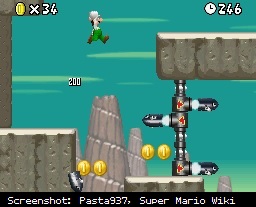 |
New Super Mario Bros.  
May 2006, Nintendo EAD
💾 34 MB
After 10 years of 3D open-world platformers, Mario and Luigi return to 2 dimensions. Introducing counterintuitive new powerups, the Mega and Mini Mushrooms, Mario (or Luigi) can become so large that he rampages across the countryside, destroying everything he touches; or so small that he can fit into the most cramped spaces imaginable and too light to sink in water. Well, okay, technically the Mega Mushroom started out as the Super Mushroom in Super Mario 64 DS, but the difference here is that it allows you to actually destroy the stage, including pipes, solid blocks, and even the goal flag, with the game rewarding you in 1up mushrooms depending on how much you can destroy. Ultimately becoming the single best-selling game for the Nintendo DS and the best-selling Mario game that was not a pack-in, New Super Mario Bros. started a sub-series within the Mario franchise, to which a new game is added each generation. |
| 2 |
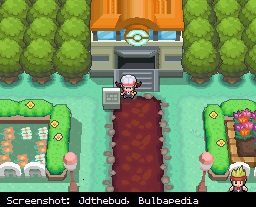 |
Pokémon HeartGold / SoulSilver
March 2010, Game Freak
💾 134 MB
Following the tradition established with FireRed / LeafGreen of remaking older games on the new hardware, HeartGold / SoulSilver is a remake of the Game Boy Color game, Pokémon Gold / Silver. A few quality-of-life improvements not possible to implement on the old 8-bit processor were added, as well as some minor feature adjustments to appeal to new players as well as those who were familiar with the original game. Unfortunately, the likelihood of finding a copy of the game with its original Pokéwalker accessory is just not going to happen, which may be a deal-breaker for some. Well, there's always Pokémon Go. |
| 3 |
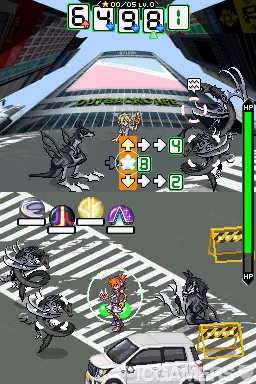 |
The World Ends with You 
July 2007, Jupiter
💾 134 MB
Definitely one of the more imaginative games released for the system, the player's reflexes get a workout as they battle enemies using two characters at the same time. The main character, Neku Sakuraba, is controlled from the touch screen whilst his partner is controlled using the buttons. Moreover, damage incurred by one character is also taken by the other. The game's storyline and settings were heavily inspired by Japanese youth culture of the time, particularly fashion. The setting is an idealised version of Shibuya, Tokyo. |
| 4 |
 |
The Legend of Zelda: Spirit Tracks
December 2009, Nintendo EAD
💾 134 MB
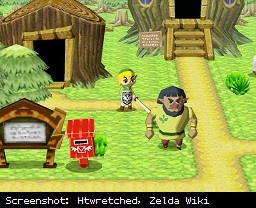
The second sequel to the GameCube title, The Wind Waker, Spirit Tracks replaces the boat with a train, causing the game to be somewhat more linear. Aonuma took some constructive criticism from players of the previous game (being Phantom Hourglass, that is) and changed a few things that people found particularly troublesome about a Zelda game whose principal controller was the touchscreen. |
| 5 |
 |
Animal Crossing: Wild World
December 2005, Nintendo EAD
💾 34 MB
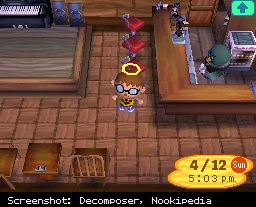
The follow-up to the GameCube title, Animal Crossing, the game retains the persistent time model by synchronising to the DS's clock and calendar. It also features much more customisation than its predecessor, such as furnishings, personal fashions, and even constellations in the sky. |
| 6 |
 |
The Sims 2
October 2005, Griptonite
💾 67 MB
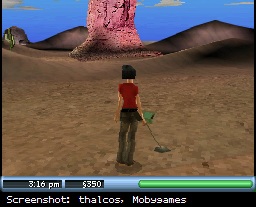
Since we're talking about social simulators, we can't forget about The Sims. Taking place before the events of Bustin' Out, the player character's car breaks down in the small desert settlement of Strangetown. While the player character waits for their car to repaired by the only handyman in town, they are seconded into serving a managerial position at the hotel. It has about as much in common with the PC version of the game as any of the Nintendo handheld Sims RPGs, being more like a Sims-themed Animal Crossing. The only frustrating bit about the game is that it synchs to the DS's clock and additions to the hotel take about 5 realtime hours to complete. What do you want? There's only one construction worker in town. |
| 7 |
 |
Mario Kart DS
November 2005, Nintendo EAD
💾 34 MB
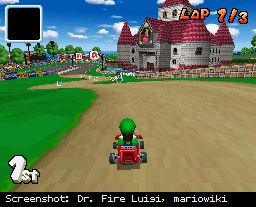
With its full 3D graphics, more intuitive control scheme, and unlockable content, Mario Kart DS left last generation's Super Circuit in the dust. Becoming the 3rd-best selling Nintendo DS game (behind New Super Mario Bros. and Nintendogs), the game also gave the player the ability to customise their own racing logo using the stylus as a paintbrush. It also introduced the idea of "slipstreaming" to the series; tailgate the driver ahead of you for a few seconds to gain enough of a speed boost to overtake them. Using PVP, the game also features 8-player simultaneous play without the need to connect to any defunct Nintendo-operated server (meaning, it will still work as intended in 2024). |
| 8 |
 |
SimCity DS
June 2007, AKI Corporation
💾 67 MB
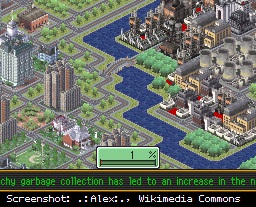
The first SimCity game for DS used SimCity 3000 as a basis for game mechanics and art assets. While playing it isn't a prerequisite to playing this, it does help in understanding how the game works. Some of the more complicated bits of SC3K were simplified for both technical and gameplay reasons, making gameplay more like 2000 than 3000 in that respect. |
| 9 |
 |
The Legendary Starfy
June 2009, Tose
💾 17 MB
Just like Fire Emblem, western audiences were introduced to Starfy (then, called "Stafy") through Super Smash Bros. Unlike Fire Emblem however, Starfy failed to capture the western market and only had 1 game released outside Japan. Taking place almost entirely underwater, only without any of the usual stuff that makes underwater levels in other games a torturous experience, Starfy isn't going to provide a huge challenge. But it's cute, fun , and captivating. Just one thing... unless you're familiar with the game, you do have to read the screen text in order to know what's going on sometimes. |
| 10 |
 |
Super Mario 64 DS
November 2004, Nintendo EAD
💾 17 MB
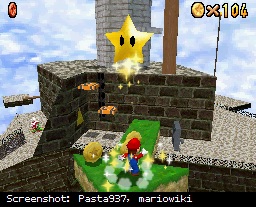
After the success of the original Super Mario 64, rumours of Luigi and Wario being in the game started flying around the internet. Screenshots that seemed to show Mario riding Yoshi around Snowman's Land appeared, tales of Luigi being trapped in a heretofore invisible box on top of the outbuilding in Big Boo's Haunt were told, yarns of performing frame-perfect feats with the castle's cannon to unlock Wario were spun. Of course, all of that was just the kind of drivel one tended to find on the internet in those days. Super Mario 64's Nintendo DS remake, however, added all of them into the main game. To this day, it remains the only mainline Super Mario game to feature Wario. The reason it isn't at the top of this list is related mostly to game control. The Nintendo DS lacks any sort of analogue control mechanism, and using the touchscreen as Nintendo intended doesn't work nearly as reliably as they say it does. However, several new courses and an impressive selection of unlockable minigames make up for the fact you can't be Vanish Wario or Metal Yoshi. |
| 11 |
 |
Pokémon Diamond / Pearl
April 2007, Game Freak
💾 67 MB
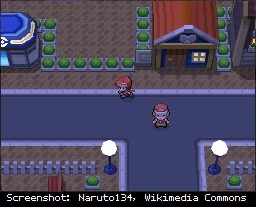
Taking place on the island of Sinnoh, the game starts out with the player-character becoming fascinated by a news report talking of a red Gyarados. As someone whose science lab assignment in college was disrupted by a Gyarados showing up on someone's Pokémon Go map and everyone (including the professor) leaving the site to catch it, I understand the feeling. Unfortunately, the game's selling point, the Global Trade Station, relied upon the now-defunct Nintendo Wi-Fi Connection, which I'm sure Nintendo thought would be around forever at the time, considering how many games used it. |
| 12 |
 |
Mario & Luigi: Partners in Time
November 2005, AlphaDream
💾 67 MB
Using the same game engine as Superstar Saga, Partners in Time unites Mario and Luigi's adult and infant selves to save the Mushroom Kingdom from alien invaders. The player can control all four Marios at once or one pair at a time to solve puzzles and battle enemies in Super Mario RPG fashion. |
| 13 |
 |
Sonic Rush
November 2005, Dimps
💾 67 MB
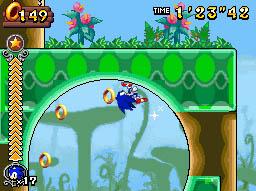
The first Sonic game for the Nintendo DS follows in the footsteps of the earlier Sonic Advance series in terms of gameplay. Instead of Tails, Amy, or Knuckles, the player has the choice of Sonic or the new character, Blaze, to play the game with. The game uses the upper screen as an extension of the lower screen, with the player character moving seamlessly between them. It was criticised at the time for its relatively short story, but as I always say, being long is not a prerequisite for being good. |
| 14 |
 |
Scribblenauts
September 2009, 5th Cell
💾 34 MB
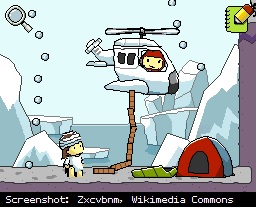
One of those "how did they do that?" moments, Scribblenauts attracted attention for its seemingly magical ability to conjure things up from player input. The player can write nearly anything on the touch screen, and it appears in the game. Cheese, rope, Abraham Lincoln, whatever the player feels they need to solve a puzzle. Rather than prudishly censoring "unsavoury" words, the game attempts to humourously subvert expectations, for instance by summoning a rooster if the player calls for a "cock". |
| 15 |
 |
DK: Jungle Climber
September 2007, Paon
💾 67 MB
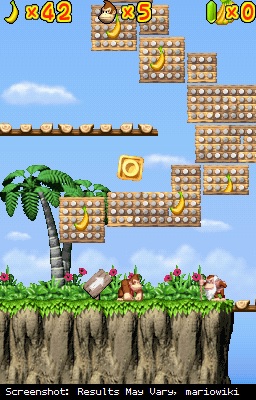
Donkey, Diddy, and Cranky are on holiday when Donkey spots what appears to be a huge banana, but it turns out to be an alien being called Xananab with a new quest for them. Rather than the traditional platforming game, Jungle Climber has more in common with King of Swing, in that the player uses pegboards, vines, and other objects to climb to the top of the level. |
DSiWare
One of the Nintendo DSi's main selling points was its ability to connect to Nintendo's DSi Shop to accept new software in the form of DSiWare. There were games, Brain Age-like mental challenges, and creative tools, as well as some very basic tools. App Store-like tools were not allowed on the DSi Shop in large quantities, as Nintendo management was adamant that they were not attempting to compete with Android and iOS apps. Board game simulations and casual games were the most common offerings on the service, but these 5 titles stood out.
"But, wait! If Nintendo shut the eShop down, how can I get these?" hShop has you covered.
| A |
 |
Mario vs. Donkey Kong: Minis March Again
June 2009, Nintendo STC
💾 15 MB
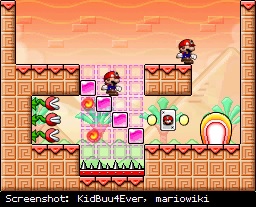
Featuring Pauline again for the first time since 1994, Minis March Again is less like its GBA predecessor, having more in common with Lemmings. The player uses the touchscreen to build staircases and platforms for the Mini Marios, Mini Toads, and Mini Peaches to walk upon in order to reach the goal. The game also has a map editor, allowing the player to come up with their own levels, unlocking new stage elements as they progress through the main game. |
| B |
 |
Art Academy: First Semester
September 2009, Headstrong Games
💾 13 MB
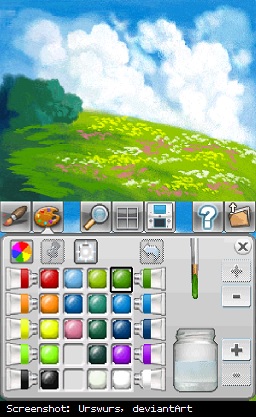
The most celebrated DSiWare application, Art Academy allows users to draw and paint using the stylus. The DSiWare version is capable of saving artworks to the SD card so users can post their work on social media or just archive it on their computer. If using a jailbroken 3DS, you might prefer the mainline 3DS title, Art Academy: Lessons for Everyone. As far as the software's main features go, you don't necessarily have to take the exams. You can just go right from the title screen to a blank canvas, upon which you may draw with pencils, paint with oils, or both. Once a pencil sketch has been selected for painting, you can't go back to the pencils however. The technique required to actually paint here is somewhat different than the Bob Ross technique, and you'll drive yourself crazy if you try to paint along with The Joy of Painting without figuring out how the brushes work first. The overall technique is somewhat more akin to Monet or Renoir style impressionism. Unlike MS Paint, the pencil erasers are never fully effective insofar as a faint impression of your previous marks remain on the paper regardless of how much you erase. Also, just like real life, there is no paint eraser and you must simply paint over your mistakes. |
| C |
 |
Shantae: Risky's Revenge
October 2010, WayForward
💾 16 MB
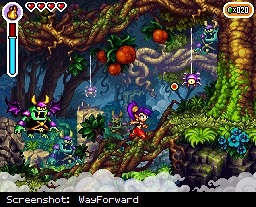
Just like the Game Boy Colour game, Risky's Revenge was a sleeper hit. While failing to to overnight numbers, it kept on selling and selling, and was eventually ported to more game consoles than Doom. Shantae and Risky Boots are once again fighting each other, but Risky manages to overpower our half-genie heroine and steal a magic lamp from Scuttle Town. In order to chase her nemesis down, Shantae has to change form into various animals, as well as dance and whip with her hair. |
| D |
 |
Earthworm Jim
May 2010, Gameloft
💾 12 MB
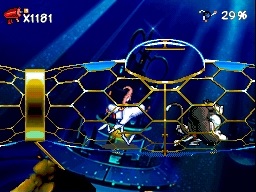
For the infamous Super NES game's sweet 16th anniversary, Gameloft re-released its special edition version for Nintendo DSiWare and an HD remaster for Xbox Live Arcade. Gameplay is nearly identical to the Super NES version, except that the touchscreen now displays the number of Jims you have left and how far through the map you've progressed. |
| E |
 |
Rayman
December 2009, Junglevision
💾 15 MB
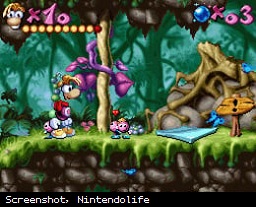
Since the graphical capabilities of the Nintendo DS were frequently compared to those of the Sony PlayStation, we'll just make it official, shall we? As in Earthworm Jim, the touchscreen displays Rayman's position in the map, but doesn't really do anything else, so you can probably reholster the stylus for this one. |
MAIN MENU | HOMEPAGE