Narration
No AI was used in the creation of this track, just my own skills as an announcer and audio producer.
Intro Song: "Retro Bright" by T1na Badgraph1csghost
All other songs originated from their respective games
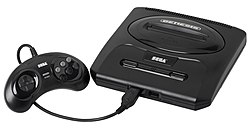
Photo: Evan-Amos, Wikimedia Foundation.
The Mega Drive was Sega's foray into 16-bit home gaming. They had already made a 16-bit arcade board, the System 16, and simply adapted it for home use. Confusingly, the console was known as "Genesis" in North America only; despite rumours of Western Digital having previously registered the name "Mega Drive", the renaming was done at the behest of CEO David Rosen, who preferred the name "Genesis". Just like the imperial measurement system, the Fahrenheit scale, and guns in every nightstand, we'll leave "Genesis" to the Americans.
| 1 | ![]() |
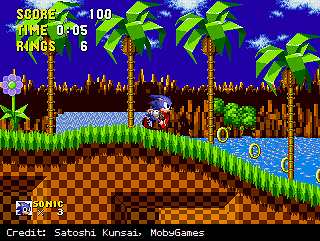
Sonic the Hedgehog
June 1991, Sonic Team Availability: Nintendo Switch, PlayStation 4, Xbox One, Valve Steam (as Sonic Origins) No list of essential Mega Drive games is complete without this one. The first in a long line of games starring Sonic, it gave the Mega Drive a platforming game that could stand up to Super Mario World, look it in the eyes, and spit on its shoes; ensuring that Nintendo and Sega would be the dominant names in home gaming until Sony came along in 1995. Unlike Mario, Sonic came with an ecological message. The robots don't just disappear in a puff of smoke when you destroy them, small animals, like piglets, seals, and birds escape from them. Dr. Robotnik was the classic eco-villain, using animal-powered robots to tear up the countryside in search of the Chaos Emeralds. Whether you pay attention to the message or not, just remember that Sonic can't breathe underwater, like Mario can. |
|---|
| 2 | ![]() |
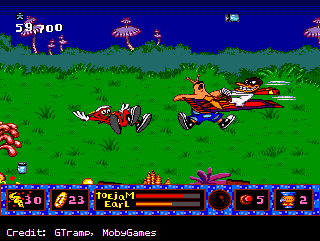
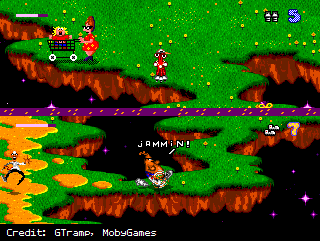
ToeJam & Earl
October 1991, Johnson-Voorsanger Availability: Nintendo Classics If Sonic the Hedgehog's message was that big industry is evil, ToeJam & Earl's is that humans in general are far out. Released around the same time as Sonic, this game is a proper Roguelike. DJ TJ and Big Earl crash their Rapmaster Rocketship on Earth and you control one of them to find its scattered parts, lifts that take you to the next level, and of course presents that contain... mostly helpful items. You can play by yourself, certainly; but the game is definitely designed for two players. Plus, the Mega Drive is smart enough to split the screen when the players get too far from each other. W... wait. Isn't this Lamont's ship? Whatever. |
|---|
| 3 | ![]() |
ToeJam & Earl in Panic on Funkotron
December 1993, Johnson-Voorsanger Availability: Nintendo Classics ToeJam & Earl's sequel returns from the Roguelike Earth to the platforming Funkotron. Ordinarily, I don't recommend sequels or series, but Panic on Funkotron has the best art-style and musical underscore of any other game on the system. It's a basic platforming collect-a-thon, sure, but we can forgive it for that because of its cinematic storyline, diverse cast of characters, and audiovisuals. |
|---|
| 4 | ![]() |
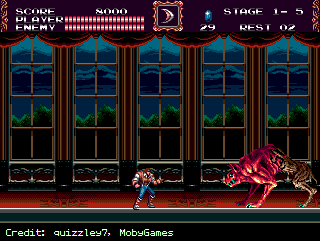
Castlevania: Bloodlines
March 1994, Konami Availability: Nintendo Classics While the Super NES had Super Castlevania IV, the Mega Drive had Bloodlines. You have an option of characters to control in this outing, similar to the mechanic in Castlevania III: Dracula's Curse of finding allies and taking advantage of their abilities. In this case, however, you make one selection and you're stuck with him for the entire game. Still, better to have options. |
|---|
| 5 | ![]() |
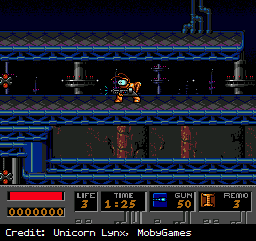
B.O.B.
September 1993, Foley Hi-Tech Availability: none Here's a game that was also released on Super NES. The Mega Drive version runs more smoothly, though; just like all Grey Matter games for that platform, the sound engine takes a backseat to physics. On Mega Drive, since the console doesn't rely on the CPU to generate sound, as well as crunch numbers for game logic, that problem doesn't exist. Plus, for some reason, the entire introductory cutscene, which establishes why B.O.B. is in this weird part of town, is completely missing. It's not until the very end that any story continuity occurs, and at that point it's just too late. B.O.B. is a platforming game, similar to both Castlevania and Metroid, but not enough to call it a Metroidvania game. |
|---|
| 6 | ![]() |
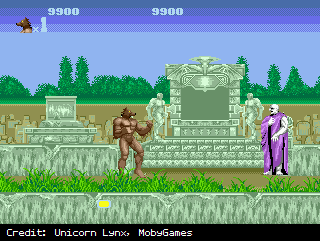
Altered Beast
August 1989, Sega Availability: Nintendo Classics The Mega Drive's launch title, this game is a console port of Sega's most popular arcade game. It lacks the rather humourous ending sequence, where all the monsters take off their costumes, revealing the whole game was a stage production, and they all have a pint together, but what're you going to do? |
|---|
| 7 | ![]() |
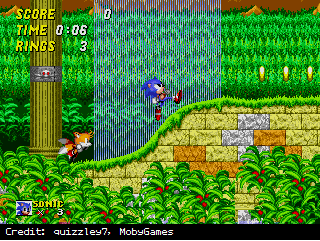
Sonic the Hedgehog 2
November 1992, Sega Technical Institute Availability: Nintendo Classics, PlayStation 4, Xbox One, Valve Steam (as Sonic Origins) As I say, I don't want to just recommend series of games, but there's page-filler and then there's quality. Unlike Super Mario Bros.'s second installment, Sonic 2 did everything a Sonic fan would want; longer levels, more speed, 2.5-D bonus level, and now, a reason to collect all those Chaos Emeralds beyond simply depriving Eggman of them: Super Sonic! Also, 2 players can play this game; one plays Sonic, the other plays "Tails". |
|---|
| 8 | ![]() |
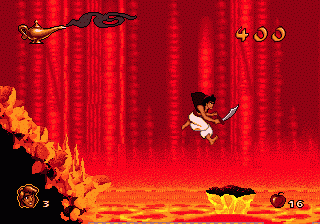
Aladdin
October 1993, Virgin Availability: none This is another game that was released on Super NES as well; however, I feel it was executed better on Mega Drive. While loosely based upon the animated film by the same title, it receives the Super Star Wars treatment here, emphasising interesting gameplay over strict adherence to the source material. While the Super NES version boasts higher-colour graphics with greater depth of detail, the Mega Drive version has YM2612 versions of several of Alan Menken's songs from the film. Gameplay is otherwise the same. |
|---|
| 9 | ![]() |
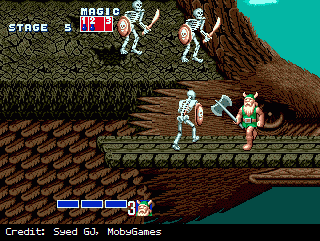
Golden Axe
December 1989, Sega Availability: Nintendo Classics Another popular Sega arcade game, along much the same lines as Altered Beast, except this time you have a weapon. I'm becoming convinced that some designer at Sega was watching He-Man and the Masters of the Universe for all the scantily-clad men they put in the arcade games. It makes me wish someone had done a He-Man game for Mega Drive... but I guess the IP was thought too old. |
|---|
| 10 | ![]() |
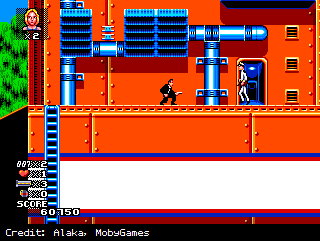
James Bond 007: The Duel
March 1993, The Kremlin Availability: none Before there was GoldenEye 007 there was this game. As evidenced by the portrait of Timothy Dalton on the title screen, The Duel was developed during the downtime between the cinematic release of License to Kill and the announcement that Pierce Brosnan was taking over for Dalton as Bond. It's a Rolling Thunder-like platformer that does to James Bond what Namco did to Star Wars on the Famicom. Don't expect realism or attention to canon here, just platforming and shooting action. |
|---|
| 11 | ![]() |
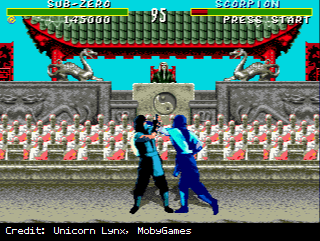
Mortal Kombat
September 1993, Probe Software Availability: none (of this version) Ah, yes. The game that, along with NARC and Doom, convinced elderly politicians that videogames were bad. I've recommended the Mega Drive version instead of the Super NES version because Nintendo demanded too many concessions be made to license it for release on their system. Sega simply put an "MA-17" marking on it and said, "sure, man, whatever." The Super NES lacks most of the fatality moves that made the arcade version memorable, whereas they're left mostly intact on Mega Drive. You play Mortal Kombat for the bowels-twisting gore; if you don't want that, play Street Fighter II. |
|---|
| 12 | ![]() |
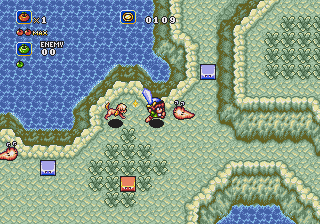
Soleil / Crusader of Centy
March 1994, Nextech Availability: Nintendo Classics Often regarded as the Mega Drive's answer to The Legend of Zelda: A Link to the Past, Soleil was part of a larger campaign by Sega to compete with Nintendo in the role-playing game market. Like Ristar, Soleil was localised differently between Japan, Europe, and North America, with Crusader of Centy being somewhat more humourous than Soleil and Shin Souseiki Ragnacenty, also being sanitised of its religious elements. Gameplay is otherwise very Zelda-like, with the player having to fight enemies in the field rather than in a traditional turn-based arena, and solve puzzles to collect items and advance to the next area. |
|---|
| 13 | ![]() |
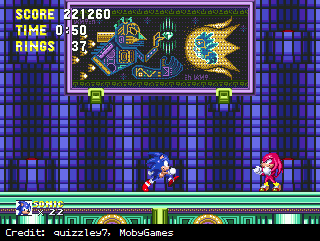
Sonic 3 & Knuckles
February 1994, Sega Technical Institute Availability: Nintendo Switch, PlayStation 4, Xbox One, Valve Steam (as Sonic Origins) If you're completely new to the Mega Drive, you may have heard about three discrete games called, Sonic the Hedgehog 3, Sonic & Knuckles, and Sonic 3 & Knuckles, and wondered what the difference was, if any. Without getting too much into technology and development history, there are actually only two discrete games, not three. Sonic 3 and Sonic & Knuckles have their own unique mapsets, premises, and soundtracks, while using the same game engine. Back in the '90s, you were supposed to buy a copy of both games, then dock Sonic 3 into S&K's cartridge bus, and I'll say mi shebeirach for you if you have a Game Genie. This tottering tower would result in Sonic 3 & Knuckles. Basically, you would start the game into Sonic 3, play through it, then automatically graduate into Sonic & Knuckles; if you had a second controller, you could play competition mode. Now, if you are familiar with the Mega Drive version, and you go with the recent compilation, Sonic Origins for Windows or Nintendo Switch, you might notice something amiss about Sonic 3's soundtrack. The worst-kept secret in gaming is that Michael Jackson (under the alias "Scirocco Jones") wrote most of the game's music. When Origins was being developed, Sega decided not to bother with the controversy that Jacko's name tends to bring along with it now, so Jun Senoue just polished his prototype music a bit more and replaced Jackson's tracks with these. Makes a big difference on Carnival Night Zone, doesn't it? |
|---|
| 14 | ![]() |
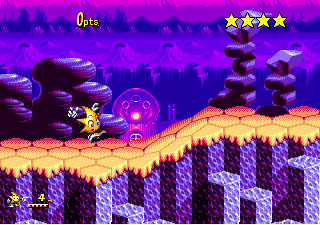
Ristar
February 1995, Sega Availability: Nintendo Classics For whatever reason, this game's storyline differs depending on whose version you play. In the Japanese release, Ristar is the tale of a shooting star child of the Star Mother Oruto who is summoned to save the elder of Planet Neer from the clutches of space pirate, Kaiser Greedy. The villain of the piece is the same in other localisations, but outside Japan, Ristar is the son of an unnamed "legendary hero", and all references to Oruto are removed. Whichever version you end up playing, Ristar is a platforming game with similarities to Sonic the Hedgehog, Super Mario Bros., and Sega's later release, NiGHTS into Dreams. Ristar can reach with his toonstretch arms and launch himself at enemies to defeat them and objects to break them open and obtain bonuses or clear obstructions. |
|---|
| 15 | ![]() |
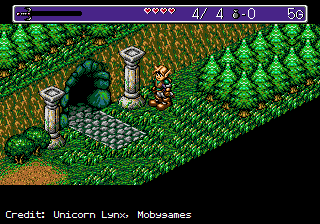
Landstalker
October 1992, Climax Entertainment Availability: Nintendo Classics The Super NES wasn't the only console to get roleplaying games. Landstalker puts you into the role of Nigel, the 88-year old treasure hunter who looks much younger than he is, who gets railroaded into protecting a wood-nymph, named Friday. It's heavy on the dialogue, especially in the beginning, but if you can get past that, it's one of the best examples of a Mega Drive roleplaying game. |
|---|